


Introduction
In the rapidly evolving blockchain ecosystem, interoperability remains one of the most critical challenges. As the number of specialized blockchains continues to grow—each with unique capabilities, cost structures, and security models—the need for efficient cross-chain communication has never been more pressing. Relay Protocol has emerged as an innovative solution to this challenge, offering a model that fundamentally reimagines how assets and information move between disparate blockchain networks.
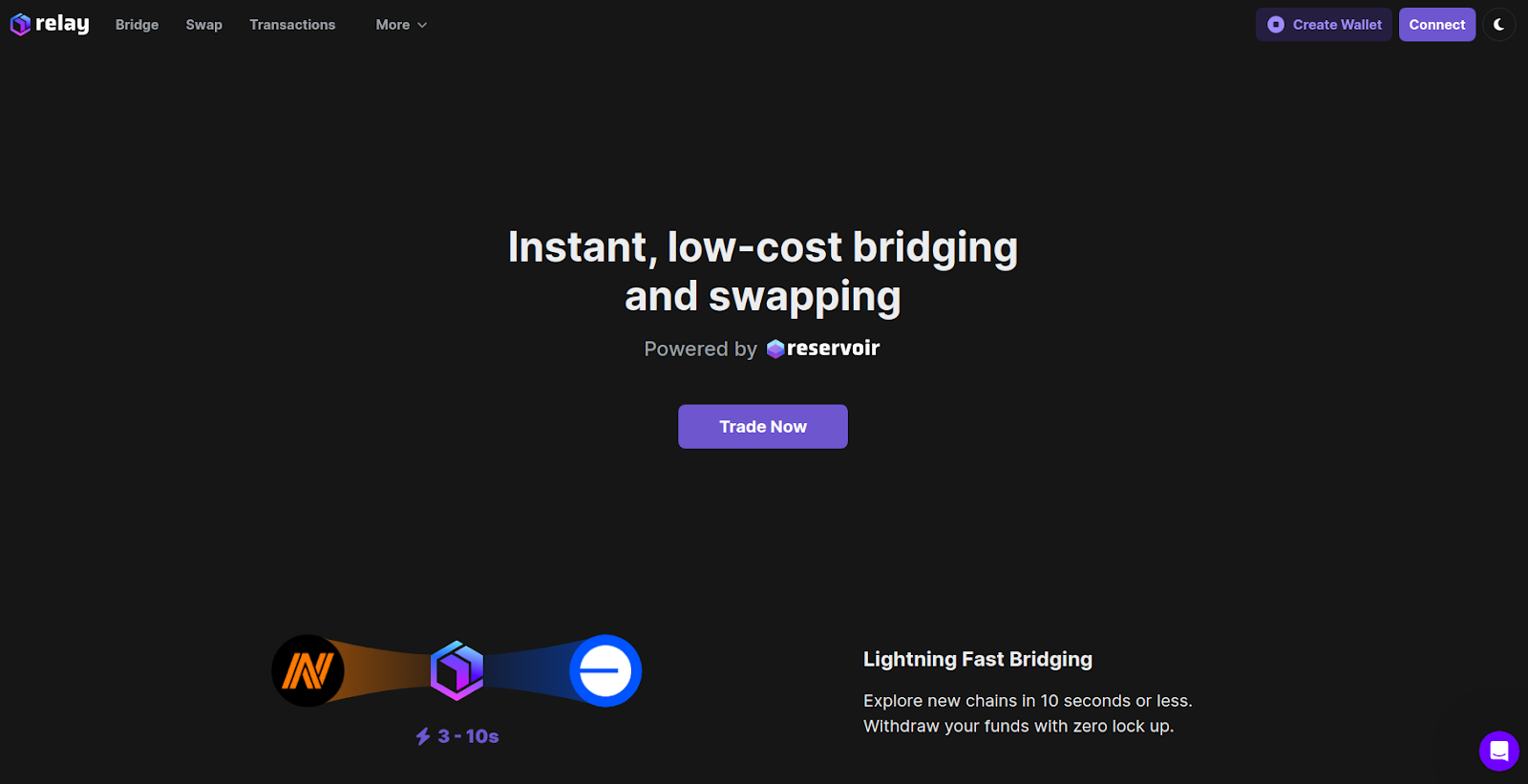
Developed by Relay Labs and powered by Reservoir, Relay Protocol implements an intent-based approach to cross-chain transactions, where specialized entities called "relayers" execute actions on behalf of users across more than 80 different blockchain networks. This model dramatically reduces gas costs, accelerates transaction times, and simplifies cross-chain operations for both users and developers.
This analysis examines how Relay Protocol's architecture addresses the limitations of traditional bridging solutions, evaluates its current market position, and explores its potential to reshape blockchain interoperability in the years ahead. With no native token but a growing community and significant backing from Reservoir's recent $14 million Series A funding, Relay Protocol presents a distinctive approach to solving one of Web3's most persistent challenges.
Understanding Relay Protocol's Core Technology
At its foundation, Relay Protocol represents a paradigm shift from traditional message-passing bridges to an intent-based relayer model. This approach fundamentally alters how cross-chain transactions are executed and settled.
The Intent-Based Model Explained
Unlike conventional bridges that rely on message passing between chains—requiring confirmations on both source and destination chains—Relay uses an intent-based system:
- User Submission: Users submit their intended transaction (e.g., "I want to transfer 1 ETH from Ethereum to Solana")
- Relayer Action: A relayer (currently Reservoir) fronts the capital needed to execute the action on the destination chain immediately
- Settlement: The transaction is settled later on a dedicated settlement chain, avoiding high-cost networks for the settlement process
This architecture enables several key advantages:
- Instant Finality: Users receive their assets on the destination chain within seconds, rather than waiting for cross-chain confirmations
- Reduced Gas Costs: By batching settlements and using a low-cost settlement chain, Relay minimizes gas expenses
- Simplified User Experience: Users don't need to manage gas on multiple chains or understand complex bridging mechanisms
Direct Transfers: A Gas-Saving Innovation
One of Relay's most significant technical innovations is its use of direct transfers between users and relayers:
- Traditional Bridge: ~250,000 gas units per transaction (using protocols like Across as a benchmark)
- Relay Protocol: ~42,000 gas units per transaction (representing an ~83% reduction)
This efficiency is achieved by eliminating intermediary smart contracts that typically custody funds during the bridging process. Instead, Relay uses a direct transfer model secured by relayer escrowed funds, creating a more streamlined and cost-effective approach.
The Evolution of Relay Protocol
Relay Protocol's development has been marked by strategic growth and community-driven decision-making, reflecting its commitment to building sustainable Web3 infrastructure.
Origin and Early Development
Relay emerged from the recognition that existing cross-chain bridges were failing to meet the needs of users engaging in low-value, high-frequency transactions—particularly in areas like NFT minting, gaming, and DeFi swaps. Traditional bridges, optimized for high-value transfers, imposed prohibitive costs for smaller transactions, creating a significant barrier to adoption.
Key Developmental Milestones
Relay's evolution can be traced through several critical developments:
- 2024 Launch: Initial release supporting 40+ chains, including Ethereum, Solana, and Bitcoin
- Q2 2024: Integration with Enkrypt wallet for seamless multichain bridging
- Q4 2024: Community decision to reject a points program, prioritizing utility over speculative incentives
- February 2025: Reservoir's $14 million Series A funding, strengthening Relay's infrastructure
- April 2025: Expansion to 80+ chains and introduction of gas top-up features to prevent failed transactions
This trajectory demonstrates Relay's focus on substantive technological development and user experience improvements rather than token-based growth hacking—a distinctive approach in the blockchain infrastructure space.
Technical Architecture and Innovation
A deeper examination of Relay Protocol's technical architecture reveals several innovative components that enable its efficiency and scalability.
The Relayer Mechanism
At the heart of Relay Protocol is its relayer system:
- Capital Provision: Relayers provide the liquidity necessary to execute cross-chain transactions instantly
- Risk Management: Relayers manage slippage, gas costs, and network conditions across multiple chains
- Settlement: Relayers batch settle transactions on a designated settlement chain to minimize costs
Currently, Reservoir serves as the primary relayer for the protocol, though the roadmap includes plans for a permissionless relayer system that would allow multiple participants to compete for transaction execution.
Settlement Chain Strategy
Relay's use of a dedicated settlement chain represents a key innovation:
- Cost Optimization: By settling transactions on low-cost chains rather than Ethereum mainnet, Relay minimizes fee overhead
- Validation Efficiency: The settlement chain validates transaction execution without requiring costly cross-chain message passing
- Scalability: This approach allows Relay to rapidly add support for new chains without complex smart contract deployments
Security Model
Relay implements a multi-layered security approach:
- Escrowed Funds: Relayers maintain escrowed funds that serve as collateral, ensuring users can be refunded if transactions fail
- Client-Side Validation: Robust validation checks prevent common user errors, such as sending to invalid addresses
- Optional Onchain Validation: For high-security applications, Relay offers additional onchain validation, though at higher gas costs
This balanced approach prioritizes security while maintaining the protocol's efficiency advantages.
Supported Blockchains
Relay's extensive chain support is a significant technical achievement:
- EVM Chains: Ethereum, Polygon, Arbitrum, Optimism, and numerous other EVM-compatible networks
- Non-EVM Chains: Solana, Bitcoin, Sui, and others with distinct programming models
- Emerging L2s: Continuous integration of new Layer-2 solutions as they gain traction
This broad coverage enables Relay to serve as a comprehensive interoperability solution rather than a chain-specific tool.
Practical Use Cases and Applications
Relay Protocol's architecture enables several compelling use cases that demonstrate its value proposition.
Cross-Chain Asset Transfers
The most straightforward application is simple asset transfers between blockchains:
- Token Bridging: Moving tokens like ETH, SOL, or USDC between supported chains
- Use Case Example: A user holding ETH on Ethereum mainnet who wants to participate in a Solana-based DeFi protocol can instantly bridge their assets without waiting for traditional cross-chain confirmations
NFT Minting and Trading
Relay's gas efficiency makes it particularly valuable for NFT operations:
- Low-Cost Minting: Enabling $1 NFT mints by reducing gas overhead
- Cross-Chain Collections: Allowing creators to offer NFTs across multiple blockchain ecosystems
- Use Case Example: An artist can mint NFTs on Polygon and make them available to collectors on Ethereum, Solana, and other chains without prohibitive gas costs
DeFi Swaps and Liquidity Access
For decentralized finance applications, Relay offers significant advantages:
- Cross-Chain Swaps: Trading tokens across different blockchain ecosystems (e.g., swapping USDC on Polygon for SOL on Solana)
- Liquidity Aggregation: Accessing the best rates across multiple chains without managing separate wallets and bridges
- Use Case Example: A trader can access liquidity pools across multiple chains to optimize slippage and find the best execution price
Gas Abstraction for dApps
Perhaps most importantly for adoption, Relay enables improved user experiences:
- Gasless Transactions: dApps can cover gas costs for users, removing a significant barrier to onboarding
- Chain-Agnostic Interfaces: Applications can operate across multiple chains without requiring users to manage gas on each network
- Use Case Example: A gaming dApp can allow users to mint in-game NFTs across multiple chains without requiring them to hold the native token of each blockchain
Economic Model and Sustainability
Unlike many blockchain infrastructure projects, Relay Protocol has taken a distinctive approach to its economic model, focusing on utility rather than speculative token economics.
Current Revenue Structure
Relay generates revenue through modest fees charged for cross-chain transactions:
- Fee Model: Relayers charge a small fee for executing transactions, with the fee structure designed to be competitive with traditional bridges
- Settlement Efficiency: By batching settlements and using low-cost chains, Relay minimizes overhead costs
- Value Capture: Fees currently accrue to Reservoir as the sole relayer, though this will change with the permissionless relayer model
No Token Approach
Notably, Relay Protocol has chosen not to launch a native token:
- Community Decision: In Q4 2024, the community voted against implementing a points program, which might have been a precursor to a token
- Utility Focus: This decision reflects a preference for building genuine utility rather than relying on token incentives
- Long-term Sustainability: The model prioritizes organic growth based on real user needs rather than speculative token economics
Future Economic Possibilities
While Relay currently operates without a token, its roadmap suggests potential evolutions:
- Permissionless Relayers: The introduction of multiple competing relayers could create a marketplace dynamic
- Potential Token Use Cases: If a token is introduced later, it might serve governance functions or incentivize relayer participation
- Fee Distribution: A more decentralized model might include fee sharing among network participants
This measured approach to economics distinguishes Relay from many projects that lead with token incentives rather than core utility.
Governance Structure
Relay Protocol employs a community-driven governance model that balances user input with efficient decision-making.
Current Governance Approach
The protocol's governance currently operates through several channels:
- Community Feedback: Users provide input through X (formerly Twitter), Telegram, and other platforms
- Transparent Communication: Development updates and roadmap decisions are shared openly
- Key Decisions: Significant choices, such as the rejection of a points program, involve community voting or feedback
Path to Decentralization
Relay's governance is expected to evolve with the introduction of the permissionless relayer protocol:
- Multiple Relayers: Allowing diverse participants to serve as relayers will distribute decision-making influence
- Potential DAO Structure: A more formalized governance system may emerge, particularly if a token is introduced
- Progressive Decentralization: The team appears to be following a gradual approach to decentralization, beginning with technical infrastructure
This governance approach emphasizes practical utility and user experience while maintaining a path toward increased decentralization over time.
Market Position and Competitive Analysis
Relay Protocol operates in the competitive cross-chain infrastructure space, where several established projects offer alternative approaches to blockchain interoperability.
Competitive Landscape
Key competitors include:
- LayerZero: A messaging protocol enabling omnichain applications with its own security model
- Across Protocol: Another intent-based bridge with a different economic model and token
- Wormhole: A popular message-passing bridge with extensive chain support
- Axelar: A secure cross-chain communication network focusing on generalized message passing
Relay's Differentiators
Within this competitive landscape, Relay offers several distinctive advantages:
- Gas Efficiency: Up to 5x more gas-efficient than competitors like Across
- Speed: Nearly instant transactions compared to message-passing bridges that require confirmations
- Chain Coverage: Support for 80+ chains, including both EVM and non-EVM networks
- Simplicity: Focus on user experience rather than complex tokenomics
- Specialized Use Cases: Optimization for low-value, high-frequency transactions like NFT mints
Market Sentiment
Community feedback suggests strong positive sentiment toward Relay:
- User Testimonials: X posts frequently describe Relay as "one of the best bridges" with praise for its speed and cost-efficiency
- Growing Adoption: Integration with wallets like Enkrypt, Phantom, Backpack, and Nightly indicates market traction
- Developer Interest: Increasing integration into dApps across various sectors
This positive sentiment, combined with Relay's technical advantages, positions it favorably despite the competitive market.
Key Strengths and Advantages
Relay Protocol's design offers several compelling advantages that contribute to its growing adoption.
Technical Efficiency
The protocol's architecture delivers measurable benefits:
- Gas Cost Reduction: 83% lower gas costs compared to traditional bridges (~42,000 vs. ~250,000 gas units)
- Transaction Speed: Seconds instead of minutes or hours for cross-chain operations
- Scalability: Easy addition of new chains without complex smart contract deployments
User Experience
From the user perspective, Relay simplifies cross-chain interactions:
- Seamless Bridging: Integrated wallet experiences through partners like Enkrypt
- Gas Top-Up Features: Prevention of failed transactions due to insufficient gas
- Minimal Technical Knowledge Required: Users don't need to understand the complexities of each chain
Flexible Application
Relay's model adapts well to diverse use cases:
- NFT Ecosystems: Enabling affordable minting and cross-chain collections
- DeFi Operations: Supporting cross-chain swaps and liquidity access
- Gaming Applications: Facilitating in-game asset transfers across chains
- Enterprise Solutions: Providing infrastructure for business blockchain applications
Strategic Backing
Reservoir's support provides significant advantages:
- Financial Resources: $14 million Series A funding strengthens development capabilities
- Technical Expertise: Reservoir's experience in Web3 infrastructure informs Relay's design
- Industry Connections: Partnerships with wallets and dApps accelerate adoption
These strengths collectively position Relay as a formidable competitor in the cross-chain infrastructure space.
Challenges and Potential Risks
Despite its advantages, Relay Protocol faces several significant challenges that could affect its long-term success.
Centralization Concerns
The current reliance on Reservoir as the sole relayer creates centralization risk:
- Single Point of Failure: If Reservoir experiences technical issues or regulatory challenges, Relay's operations could be disrupted
- Trust Assumptions: Users must trust Reservoir to execute transactions faithfully
- Decentralization Timeline: The transition to a permissionless relayer model is critical but faces implementation challenges
User Error Potential
The direct transfer model, while efficient, introduces specific risks:
- Address Validation: Sending to incorrect addresses could result in permanent loss of funds
- Chain Selection Errors: Choosing the wrong destination chain could lead to failed transactions
- Mitigation Measures: While client-side validation helps, user education remains essential
Competitive Pressures
The cross-chain infrastructure space is becoming increasingly crowded:
- Established Competitors: Projects like LayerZero and Wormhole have strong market positions
- Emerging Solutions: New entrants continue to appear with innovative approaches
- Differentiation Challenge: Maintaining a distinctive value proposition requires continuous innovation
Regulatory Uncertainties
The evolving regulatory landscape poses potential challenges:
- Cross-Border Transactions: Regulations affecting cross-chain transfers vary by jurisdiction
- Permissionless Relayers: Decentralized relayer networks may face regulatory scrutiny
- Compliance Requirements: Adapting to changing regulations could require protocol modifications
Technical Scaling Challenges
Supporting a growing ecosystem introduces technical complexities:
- Chain Diversity: Each new chain integration requires specific technical accommodations
- Security Assurance: Maintaining security across diverse blockchain environments is complex
- Performance Consistency: Ensuring reliable performance during peak usage periods
Addressing these challenges will be critical for Relay's long-term success and adoption.
Future Roadmap and Development
Relay Protocol's future development focuses on several key areas that will shape its evolution in the coming years.
Permissionless Relayer Protocol
Perhaps the most significant planned development is the transition to a permissionless relayer system:
- Multiple Relayers: Allowing diverse participants to serve as relayers, enhancing decentralization
- Competitive Market: Creating price competition that could further reduce fees
- Trust Minimization: Reducing reliance on any single entity for transaction execution
Expanded Chain Support
Relay plans to continue expanding its blockchain coverage:
- Emerging L2s: Supporting new Layer-2 solutions as they gain traction
- Non-EVM Ecosystems: Further integration with non-Ethereum virtual machine blockchains
- Target: Exceeding 100 supported chains in the near future
dApp Integration Strategy
Deeper integration with decentralized applications forms another key focus:
- Developer Tools: Enhanced SDKs and APIs for seamless integration
- Specialized Solutions: Tailored offerings for DeFi, NFT, and gaming applications
- Enterprise Partnerships: Collaborations with businesses implementing blockchain solutions
Community Growth Initiatives
Building and sustaining the community remains a priority:
- Educational Content: Resources to help users understand cross-chain operations
- Governance Participation: Increased opportunities for community input
- Regular Communication: AMAs, development updates, and transparent roadmap sharing
Potential Token Considerations
While no token currently exists, future possibilities remain open:
- Governance Token: Potentially enabling more formalized community governance
- Relayer Incentives: Possibly incentivizing relayer participation and competition
- Community Decision: Any token introduction would likely involve community input
This ambitious roadmap reflects Relay's commitment to building comprehensive cross-chain infrastructure while progressively decentralizing its operations.
Investment Considerations
For those evaluating Relay Protocol from an investment perspective, several factors merit consideration.
Current Investment Opportunities
With no native token, direct investment in Relay Protocol is currently limited to:
- Reservoir Investment: Backing the company that powers Relay's infrastructure
- Ecosystem Participation: Building applications that leverage Relay's capabilities
- Industry Positioning: Investing in complementary technologies that may benefit from Relay's growth
Future Potential
If Relay introduces a token or other investment mechanisms, potential value drivers include:
- Transaction Volume: Growth in cross-chain activity directly impacts potential fee revenue
- Chain Expansion: Each new supported chain expands the addressable market
- Relayer Economics: The permissionless relayer model could create new economic opportunities
- Network Effects: Increasing adoption creates compounding value for the ecosystem
Monitoring Metrics
Key indicators to watch for evaluating Relay's progress:
- Transaction Volume: Number and value of cross-chain transactions processed
- dApp Integrations: Adoption by decentralized applications across different sectors
- Developer Activity: Engagement with Relay's APIs and development tools
- Competitive Position: Relative market share compared to other cross-chain solutions
Risk Assessment
Potential investors should consider several risk factors:
- Competitive Displacement: Emerging technologies could potentially offer superior approaches
- Regulatory Changes: Evolving rules could impact cross-chain operations
- Technical Vulnerabilities: Security issues could affect trust in the protocol
- Adoption Barriers: User and developer onboarding challenges could slow growth
A balanced assessment would acknowledge both Relay's significant potential and the inherent uncertainties in the rapidly evolving blockchain infrastructure space.
Conclusion
Relay Protocol represents a significant innovation in blockchain interoperability, offering a relayer-based approach that dramatically reduces costs and transaction times for cross-chain operations. By leveraging an intent-based model where specialized entities execute transactions on behalf of users, Relay has created a solution particularly well-suited to low-value, high-frequency actions that were previously impractical on traditional bridging systems.
With support for over 80 chains, including major networks like Ethereum, Solana, and Bitcoin, Relay has positioned itself as a comprehensive cross-chain solution. Its technical architecture delivers measurable advantages—including 83% gas savings compared to alternative approaches and nearly instant transaction finality—while maintaining the security and reliability necessary for blockchain applications.
Unlike many blockchain projects, Relay has chosen to focus on utility rather than speculative tokenomics, with the community explicitly rejecting a points program in favor of sustainable development. This approach, combined with Reservoir's $14 million Series A funding, provides a solid foundation for continued growth and innovation.
Looking ahead, Relay faces both opportunities and challenges. The planned transition to a permissionless relayer model will enhance decentralization but introduces implementation complexities. Competitive pressures from established cross-chain solutions require continuous innovation, while regulatory uncertainties necessitate adaptability.
For users, developers, and potential investors, Relay Protocol offers a compelling vision of blockchain interoperability—one where moving assets and information between chains becomes as seamless and affordable as transactions within a single network. If successful in executing its roadmap, Relay could play a significant role in enabling the next generation of cross-chain applications, contributing to a more connected and efficient blockchain ecosystem.
This analysis is based on information available as of May 8, 2025, and represents an independent assessment of the Relay Protocol. It should not be considered financial advice. Readers should conduct their own research before making investment decisions.