


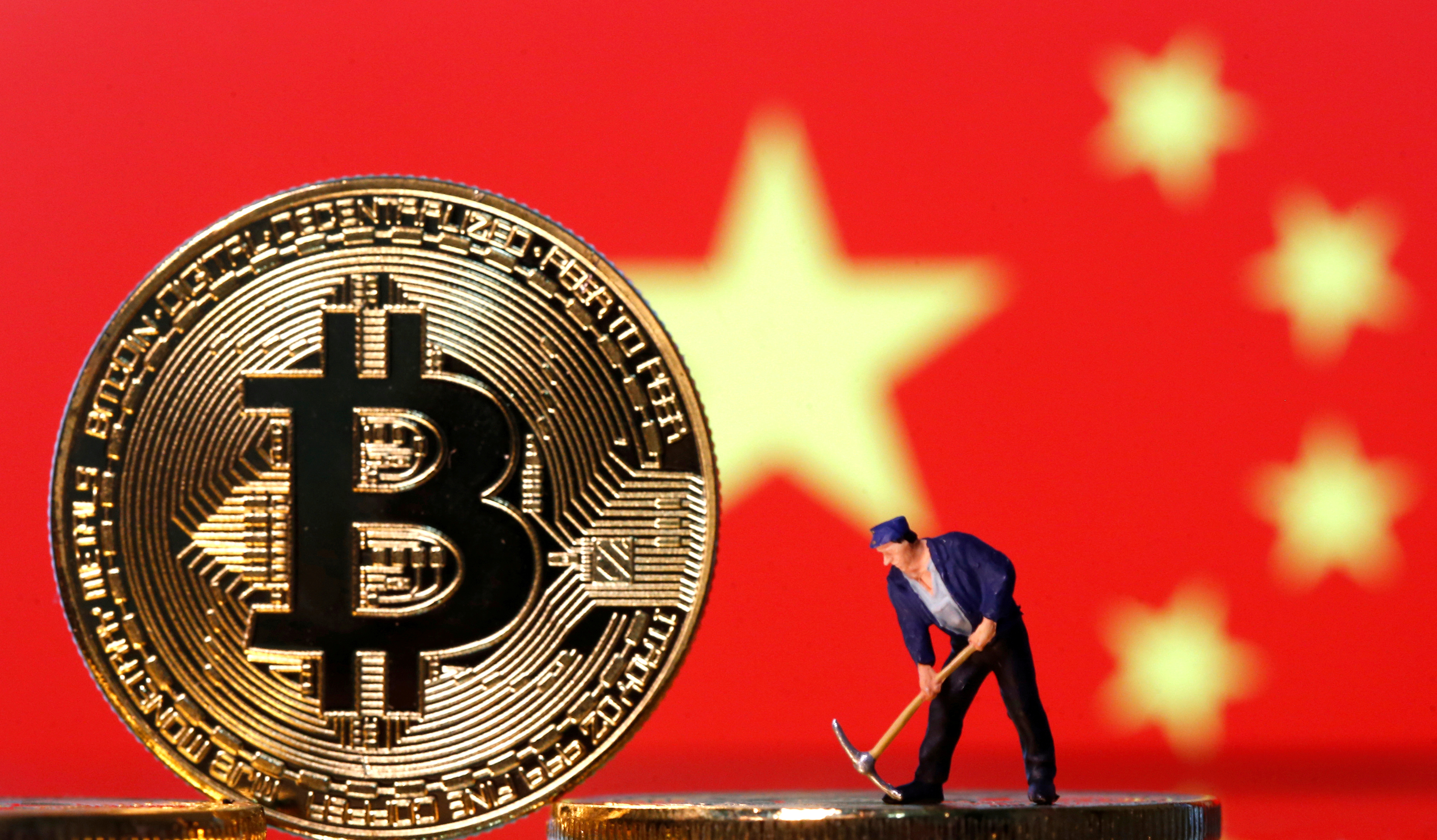
In the evolving landscape of global investments, rumors have circulated that Chinese retail investors are pivoting from traditional safe-haven assets like gold to cryptocurrencies, particularly Bitcoin. This comprehensive analysis examines the validity of these claims, exploring market data, economic factors, and investor behavior to determine whether a significant shift is occurring in the world's second-largest economy.
Executive Summary
Despite some speculation about Chinese investors selling gold to purchase Bitcoin, the available evidence suggests this is not occurring as a widespread trend. While Bitcoin has shown strong performance in early 2025 and some tech-savvy Chinese investors may be increasing their cryptocurrency exposure, gold remains overwhelmingly popular as a safe-haven asset in China. Both institutional and retail investment in gold has reached record levels in early 2025, with significant ETF inflows and central bank purchases reflecting robust demand rather than divestment.
Gold Investment Trends in China: Stronger Than Ever
Record ETF Inflows
The data from early 2025 shows remarkable strength in China's gold investment sector:
- Chinese gold ETFs saw inflows of RMB5.6 billion (US$772 million) in March 2025 alone
- Total assets under management reached RMB101 billion (US$14 billion)
- Holdings increased by 7.7 tons to 138 tons in March
- The first eleven days of April 2025 saw additional inflows of 29.1 metric tons
- In a single week in April, four major onshore gold ETFs received approximately 7.6 billion yuan ($1 billion)
These figures represent acceleration rather than decline, with April's first eleven days surpassing the entire first quarter's inflows of 23.5 tons.
Central Bank Accumulation
The People's Bank of China (PBoC) has maintained its gold purchasing strategy:
- Added 2.8 tons in March 2025
- Acquired 12.8 tons in Q1 2025
- Total official holdings reached 2,292 tons, representing 6.5% of total reserves
Retail Investment Remains Strong
Beyond institutional investment, individual Chinese investors continue to demonstrate strong interest in physical gold:
- China recorded its second-highest quarter of retail investment in gold bars and coins in Q1 2025
- Retail demand remains elevated compared to historical averages
- Physical gold purchases have been motivated by:
- Escalating U.S.-China trade tensions
- Economic uncertainties in domestic markets
- The gold's reputation as sanction-proof
Bitcoin Activity Among Chinese Investors
Despite China's 2021 ban on cryptocurrency trading and mining, there is evidence of continued Bitcoin interest among some Chinese investors:
Circumventing Restrictions
- Chinese retail investors use offshore exchanges, Hong Kong accounts, and DeFi protocols to access Bitcoin
- Some utilize their annual $50,000 forex purchase quotas to invest in cryptocurrencies via Hong Kong
- The Chainalysis 2024 Global Crypto Adoption Index ranks China 20th globally in grassroots crypto adoption
Performance Incentives
Bitcoin's recent performance may be attracting investor attention:
- Bitcoin reclaimed $90,000 in April 2025, posting a 10% gain for the month
- This outperformed gold's 8% gain during the same period
- Between April 21 and May 2, 2025, IBIT (a Bitcoin ETF) rose from $49.78 to $54.95
- During the same period, GLD (a gold ETF) declined from $316.75 to $297.46
Regulatory Speculation
Some interest in Bitcoin may be driven by speculation about potential policy changes:
- Hong Kong's increasingly crypto-friendly stance has fueled speculation about mainland China possibly easing restrictions
- A March 28, 2025 report suggested China might reconsider its cryptocurrency ban
- Any potential policy shift would likely be gradual and heavily regulated
Comparative Market Performance
The table below highlights the divergent performance of gold and Bitcoin ETFs in the spring of 2025:
| Date | GLD Price (USD) | IBIT Price (USD) |
|---|---|---|
| 2025-04-02 | 292.00 | 46.87 |
| 2025-04-21 | 316.75 | 49.78 |
| 2025-04-30 | 301.69 | 53.56 |
| 2025-05-01 | 298.21 | 54.90 |
| 2025-05-02 | 297.46 | 54.95 |
This data shows that while gold experienced a correction after reaching record highs, Bitcoin demonstrated consistent growth. This short-term outperformance may have prompted tactical portfolio adjustments among some investors, though not necessarily at gold's expense.
Economic and Geopolitical Factors
Several broader factors are influencing investment decisions in China:
Trade Tensions
- Escalating U.S.-China trade disputes, with tariffs reaching as high as 245% on some Chinese exports
- Growing economic uncertainty driving demand for safe-haven assets
- Concerns about potential sanctions or economic decoupling
Currency Considerations
- The yuan reached lows unseen since 2007 in April 2025
- Currency weakness incentivizes diversification into non-yuan denominated assets
- Both gold and Bitcoin offer protection against domestic currency devaluation
Market Volatility
- Continued weakness in China's property sector
- Volatility in domestic stock markets
- Limited investment alternatives for capital preservation
Analysis of Contradictory Evidence
Some reports and social media discussions have suggested more dramatic shifts in investment patterns:
Institutional vs. Retail Behavior
- A Medium article from April 19, 2025 claimed that China sold 15,000 Bitcoin (worth $1.25 billion) to fund gold purchases
- This likely refers to central bank or institutional actions rather than retail investor behavior
- Central bank strategy differs significantly from individual investor approaches
Social Media Speculation
- X posts have speculated about China potentially selling gold to buy Bitcoin as a counter to U.S. influence
- Other posts suggest diversification into both assets, primarily from U.S. Treasury holdings
- These discussions remain largely speculative without substantial evidence
Conclusion: Evolution Rather Than Revolution
The available evidence does not support claims of a widespread shift from gold to Bitcoin among Chinese retail investors in early 2025. Instead, the data suggests:
- Gold remains dominant: Record ETF inflows, central bank purchases, and strong retail demand demonstrate gold's continued appeal as the primary safe-haven asset for Chinese investors.
- Selective Bitcoin adoption: Some investors, particularly younger or more tech-savvy individuals, may be adding Bitcoin exposure while maintaining gold positions.
- Diversification strategy: Rather than an either/or approach, Chinese investors appear to be diversifying across multiple assets to hedge against various economic risks.
- Performance-based tactical adjustments: Short-term outperformance of Bitcoin over gold in April 2025 may have prompted tactical reallocations among active traders, but not a strategic pivot.
The relationship between gold and Bitcoin investment in China is evolving as part of a broader diversification strategy rather than representing a fundamental shift away from traditional safe-haven assets. Both assets continue to attract significant interest for their distinct characteristics: gold for its established stability and immunity to sanctions, and Bitcoin for its growth potential and decentralized nature.
Future Outlook
Going forward, several factors will likely influence the gold-Bitcoin dynamic among Chinese investors:
- Regulatory developments: Any easing of China's cryptocurrency restrictions would substantially impact Bitcoin adoption rates
- U.S.-China relations: Continued deterioration could enhance appeal of both gold and Bitcoin as dollar alternatives
- Domestic economic conditions: Persistent weakness in property and equity markets may drive further safe-haven demand
- Performance divergence: Continued outperformance by either asset could gradually shift allocation preferences
Investors should monitor official policy statements, ETF flow data, and trading volumes on Hong Kong exchanges for early indicators of any significant shifts in Chinese investor preferences between these two assets.
This analysis is based on data available as of May 2025 and represents market conditions at that time. Investment strategies should be based on individual circumstances and up-to-date information.