


The Inflation Cool-Down: Numbers Tell the Story
After several years of elevated inflation that kept the Federal Reserve in a hawkish stance, the latest economic indicators point to a meaningful cooling in price pressures across the U.S. economy. The March 2025 data reveals a continued trend of moderating inflation, providing much-needed economic stability and potentially shifting the monetary policy landscape.
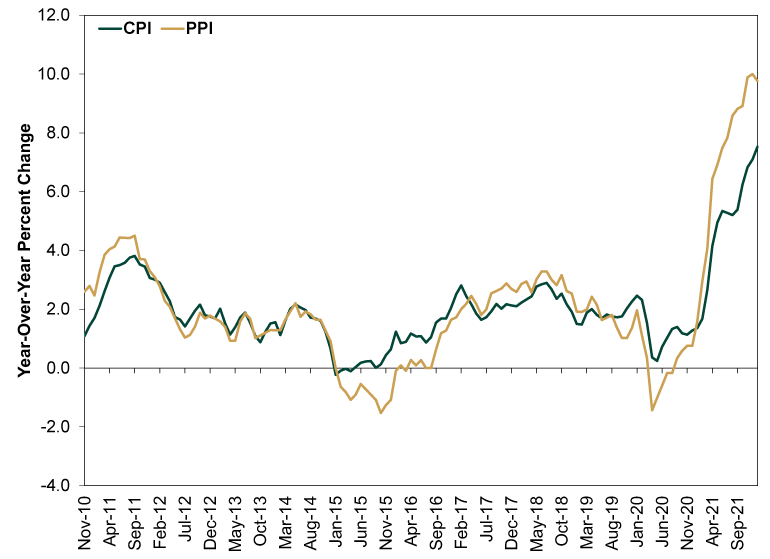
Consumer Price Index (CPI) data released by the Bureau of Labor Statistics on April 9, 2025, showed a year-over-year increase of 2.4%, a notable decrease from February's reading of 2.8%. This headline CPI figure, which reached an index level of 319.799 (using the 1982-84 base period), represents the closest approach to the Federal Reserve's target of 2% in recent years.
The core CPI measure, which excludes volatile food and energy prices and is often viewed as a better indicator of underlying inflation trends, registered a 2.8% annual increase. While still above the Fed's target, this represents a significant improvement from February's 3.1% reading and suggests that inflationary pressures are steadily abating.
On the producer side, the story is similar. The Producer Price Index (PPI), which measures price changes from the perspective of sellers, rose 2.75% year-over-year in March 2025, down from 3.2% in February. The index value stood at 147.46 (November 2009=100), representing a month-over-month decrease of 0.39%. This decline in producer-level inflation often precedes further improvements in consumer prices, as businesses gradually pass cost reductions to end consumers.
These figures collectively paint a picture of an economy where inflationary pressures, while not entirely vanquished, have been effectively contained. With headline CPI at 2.4% and PPI at 2.75%, both metrics are inching closer to the Federal Reserve's 2% target, creating a foundation for potential monetary policy adjustments that could significantly impact investment markets—including cryptocurrencies.
Federal Reserve's Delicate Dance: Rate Cut Horizons
The Federal Reserve's response to contained inflation will likely shape investment landscapes across all asset classes in 2025. As of the March 2025 Federal Open Market Committee (FOMC) meeting, the Fed maintained its target range for the federal funds rate at 4.25% to 4.50%, a level considered restrictive by historical standards but appropriate given recent economic conditions.
With inflation now showing consistent signs of moderation, the path toward monetary easing appears increasingly clear. The FOMC projections from March 2025 indicated expectations for two additional rate cuts in 2025, totaling a 0.50% reduction by year-end. However, market participants have priced in a more aggressive easing cycle, with futures markets reflecting near 100% probability for a June cut and a total of three quarter-point reductions before December.
This divergence between Fed projections and market expectations highlights the tension between the central bank's cautious approach and investors' eagerness for looser monetary conditions. The Fed must balance inflation control with economic growth considerations, particularly given uncertainties surrounding fiscal policies like tariffs that could reignite price pressures.
The timing and pace of rate cuts will be crucial. An earlier-than-expected move in June would signal confidence that inflation is firmly under control, while a delay could indicate lingering concerns about inflation's persistence. Each decision will send ripples through financial markets, with potentially outsized effects on more speculative assets like cryptocurrencies.
Lower interest rates typically increase liquidity in financial markets by reducing borrowing costs and encouraging capital allocation toward higher-yielding investments. This environment generally favors risk assets, as the opportunity cost of holding non-yielding or speculative investments decreases when safer alternatives like Treasury bonds offer lower returns.
Liquidity Tsunami: The Crypto Catalyst
The anticipated shift in monetary policy creates potential tailwinds for cryptocurrency markets through multiple mechanisms, most notably through increased financial system liquidity. Interest rate reductions by the Federal Reserve typically lead to expanded monetary conditions that ripple through the entire investment landscape.
When the cost of capital decreases through lower interest rates, several effects emerge that may benefit cryptocurrency markets:
- Reduced Opportunity Cost: Lower yields on traditional fixed-income investments diminish the opportunity cost of allocating capital to non-yielding assets like Bitcoin or other cryptocurrencies. When Treasury bonds or savings accounts offer minimal returns, investors are more willing to accept the volatility of cryptocurrencies in pursuit of higher potential returns.
- Increased Risk Appetite: Accommodative monetary policy generally encourages risk-taking behavior across financial markets. As liquidity increases and borrowing costs fall, investors typically move further out on the risk spectrum, potentially increasing allocations to emerging assets like cryptocurrencies.
- Institutional Capital Flows: Lower interest rates can prompt institutional investors to seek alternative investments with higher return potential. As major financial institutions continue developing cryptocurrency infrastructure and offerings, rate cuts may accelerate institutional adoption and capital deployment into digital assets.
- Venture Capital Acceleration: The cryptocurrency ecosystem relies heavily on venture capital funding for new project development. Lower interest rates create a more favorable environment for venture capital, potentially increasing funding for blockchain startups and infrastructure, which strengthens the broader crypto ecosystem.
Historical patterns support this relationship. Previous periods of monetary easing have coincided with bull markets in cryptocurrencies, though the correlation is not perfect and involves complex time lags. The Federal Reserve's rate cuts earlier in 2024 coincided with increased institutional interest in Bitcoin, suggesting a potential repeat as the 2025 easing cycle progresses.
The crypto market, with a total capitalization of approximately $2 trillion as of early 2025, remains small enough that marginal increases in capital flows can produce significant price movements. Even a modest reallocation of capital from traditional markets into cryptocurrencies could substantially impact valuations across the digital asset space.
Inflation Hedge Paradox: Bitcoin's Evolving Narrative
The relationship between inflation and cryptocurrency demand introduces an interesting paradox. Bitcoin, in particular, has been marketed as "digital gold" and a hedge against inflation, primarily due to its fixed supply cap of 21 million coins. This narrative gained significant traction during the high-inflation period of 2021-2022, when concerns about currency debasement drove investors toward hard assets.
In a lower-inflation environment, this narrative faces a test. If Bitcoin's primary value proposition rests on being an inflation hedge, then logically, demand should decrease as inflation subsides. This creates a potential contradiction: while easing monetary policy may increase liquidity and risk appetite, the fundamental inflation hedge narrative weakens.
However, the evidence suggests Bitcoin and the broader cryptocurrency market can thrive even in low-inflation environments, indicating that the inflation hedge narrative, while important, represents just one aspect of cryptocurrency's appeal. Data from periods of moderate inflation before 2021 showed that Bitcoin could appreciate significantly even when inflation concerns were minimal.
This points to an evolution in Bitcoin's value proposition beyond mere inflation protection. As institutional adoption increases and regulatory frameworks mature, Bitcoin increasingly represents:
- A Digital Store of Value: Independent of current inflation rates
- Financial System Optionality: Providing alternatives to traditional banking
- Portfolio Diversification: Offering non-correlated returns to traditional assets
- Technological Innovation Exposure: Providing investment exposure to blockchain advancements
This multifaceted value proposition may allow cryptocurrencies to benefit from both high-inflation environments (through the hedge narrative) and low-inflation, accommodative monetary policy environments (through increased liquidity and risk appetite).
Interestingly, the controversy around cryptocurrencies as effective inflation hedges adds another dimension. Some analyses indicate that during the high inflation of 2021-2022, crypto markets experienced significant drawdowns, challenging the straightforward hedge narrative. This suggests that cryptocurrency performance during inflationary periods is more complex than often presented, involving factors beyond inflation rates alone, such as monetary policy, regulatory developments, and technological advancements.
Market Projections: Numbers on the Horizon
Against the backdrop of contained inflation and anticipated rate cuts, market analysts have developed increasingly bullish projections for cryptocurrency performance through 2025. These forecasts, while inherently speculative, provide insight into how market participants view the interplay between macroeconomic conditions and digital asset valuations.
Bitcoin, as the dominant cryptocurrency by market capitalization, features prominently in these projections. Several major financial institutions have published price targets for Bitcoin ranging from $100,000 to $180,000 by the end of 2025. These projections typically cite a combination of factors, including:
- Favorable liquidity conditions from Fed easing
- Continued institutional adoption, particularly through spot ETF products
- Mining reward halving effects from April 2024
- Regulatory clarity from the pro-crypto U.S. administration
While Bitcoin dominates the headlines, the broader altcoin market is expected to experience significant volatility with potential for substantial returns. Ethereum, with its transition to proof-of-stake complete and scaling solutions deploying, features in many institutional portfolios alongside Bitcoin. Layer-2 solutions and emerging blockchains focused on specific use cases may experience even more dramatic price movements, both positive and negative, as liquidity conditions improve.
The total cryptocurrency market capitalization, which reached approximately $2 trillion in early 2025, is projected by some analysts to potentially double by year-end if favorable macroeconomic conditions persist. This would represent a significant but not unprecedented growth rate for the volatile crypto market.
However, these projections come with important caveats. The cryptocurrency market remains highly sensitive to regulatory developments, technological challenges, and security concerns. Even in a favorable macroeconomic environment, idiosyncratic risks specific to the crypto ecosystem could derail otherwise positive momentum.
Risk Currents: Navigating Uncertain Waters
Despite the generally positive outlook created by contained inflation and anticipated monetary easing, significant risks remain that could alter the trajectory of cryptocurrency markets through 2025 and beyond.
Macroeconomic Risks
While current data suggests controlled inflation, several factors could reignite price pressures:
- Fiscal Policy Tension: Tariffs and trade restrictions could introduce supply-side inflation that monetary policy alone cannot address, potentially limiting the Fed's ability to cut rates as aggressively as markets expect.
- Labor Market Tightness: Though not highlighted in the provided data, persistent strength in the labor market could maintain wage pressures that eventually translate to broader inflation, complicating the Fed's easing plans.
- Energy Price Volatility: Geopolitical tensions and supply constraints could drive energy prices higher, a factor that often leads broader inflation metrics due to energy's role as an input for virtually all economic activity.
If any of these factors cause inflation to reaccelerate, the Federal Reserve might delay or reduce planned rate cuts, potentially dampening enthusiasm for risk assets including cryptocurrencies.
Cryptocurrency-Specific Risks
Beyond macroeconomic considerations, the crypto market faces its own unique challenges:
- Regulatory Uncertainty: Despite the pro-crypto U.S. administration, regulatory frameworks remain in flux globally. New restrictions or compliance requirements could significantly impact market structure and accessibility.
- Smart Contract Vulnerabilities: As DeFi and other blockchain applications grow more complex, the risk of significant exploits or failures increases, potentially triggering broader market contagion.
- Market Structure Concerns: Concentration of ownership, exchange vulnerabilities, and stablecoin risks all represent potential flash points that could trigger market dislocations independent of macroeconomic conditions.
- Correlation Shifts: Historically, crypto has shown varying correlations with traditional risk assets. Any shift toward higher correlation with equities during market stress could undermine the diversification benefits attracting institutional investors.
These risks highlight the importance of considering both macroeconomic conditions and cryptocurrency-specific factors when assessing the potential impact of contained inflation and monetary easing on digital asset markets.
Strategic Perspectives: Navigating the New Normal
For investors considering cryptocurrency exposure in light of contained inflation and expected monetary easing, several strategic considerations emerge that may inform portfolio construction and risk management decisions.
Timeframe Differentiation
The impact of monetary policy on cryptocurrencies likely varies by time horizon:
- Short-term (0-6 months): Initial rate cut announcements may trigger volatility and potential price appreciation as markets price in the full easing cycle.
- Medium-term (6-18 months): The actual liquidity effects of lower rates typically manifest more fully in this period, potentially supporting sustained price appreciation if other factors remain favorable.
- Long-term (18+ months): Fundamental adoption metrics and technological development likely overshadow monetary policy effects, particularly if inflation and rates stabilize at new equilibrium levels.
This timeline suggests different approaches for traders versus long-term investors, with the former potentially focusing on catalysts around FOMC meetings and economic data releases, while the latter may maintain focus on fundamentals and adoption trends.
Asset Selection Considerations
Not all cryptocurrencies will benefit equally from improved liquidity conditions:
- Bitcoin: Likely benefits from both institutional flows (particularly through ETFs) and its established position, though its lower volatility may mean more moderate returns than smaller cryptocurrencies.
- Ethereum and Major Layer-1 Blockchains: May see increased demand from both retail and institutional sources as risk appetite improves, particularly those with clear use cases and developer activity.
- DeFi Tokens: Could experience outsized benefits if lower interest rates increase experimentation with alternative yield sources, though regulatory risks remain elevated in this sector.
- Emerging Categories: Areas like AI-crypto intersections, real-world asset tokenization, and infrastructure projects may attract venture capital and growth investment in an easier liquidity environment.
This differentiation highlights the importance of looking beyond simple "crypto exposure" to consider how specific projects and tokens might respond differently to changing macroeconomic conditions.
Integration with Traditional Finance
The relationship between cryptocurrencies and traditional financial markets continues to evolve, with implications for how digital assets respond to macroeconomic shifts:
- Correlation Dynamics: Monitoring how crypto correlations with equities, bonds, and gold evolve during rate cuts provides insight into changing market perceptions and capital flows.
- Institutional Framework Development: The growth of regulated access points like ETFs, futures, and custody solutions increases the transmission mechanism between monetary policy and crypto markets.
- Traditional Finance Adoption: Banks and financial institutions increasingly offering crypto services creates new channels for liquidity to enter the space when monetary conditions ease.
These integration points highlight how the cryptocurrency market of 2025 differs significantly from previous cycles, with increasingly robust connections to traditional finance potentially amplifying the effects of monetary policy shifts.
Conclusion: A Measured Optimism
The data indicating contained inflation in March 2025—with CPI at 2.4% and PPI at 2.75% year-over-year—creates a foundation for potential Federal Reserve easing that could benefit cryptocurrency markets through improved liquidity conditions and increased risk appetite. While the inflation hedge narrative may become less prominent in a lower-inflation environment, the multifaceted value proposition of digital assets suggests continued relevance and potential appreciation.
Market projections suggesting significant growth through 2025 rest on this macroeconomic foundation, though numerous risks—both macroeconomic and crypto-specific—could alter this trajectory. For investors navigating this landscape, a nuanced understanding of how monetary policy transmits to digital asset markets, differentiated by timeframe and asset category, provides a framework for strategic decision-making.
The relationship between inflation, monetary policy, and cryptocurrency markets remains complex and evolving. As the digital asset ecosystem matures and integrates further with traditional finance, these relationships will likely become more stable and predictable, potentially reducing volatility while maintaining the innovative and disruptive potential that attracts investors to the space.
In this context, the contained inflation of early 2025 represents not just a momentary data point but a potential inflection in the monetary policy cycle with far-reaching implications for how capital flows through increasingly interconnected global financial markets—both traditional and digital.